

Air Cooler vs AC 2026: Which One Saves More Electricity & Money?
As summer 2026 approaches, millions of households are facing the same decision: Air Cooler vs AC 2026 — which one should you choose?
With rising electricity costs and increasing global temperatures, this choice is no longer just about comfort. It’s about saving money, reducing electricity bills, and making a smarter long-term investment.
In this complete guide, we’ll break down everything you need to know about Air Cooler vs AC 2026, including electricity usage, cooling performance, cost comparison, pros and cons, and which option is best for your specific situation.
What is an Air Cooler?
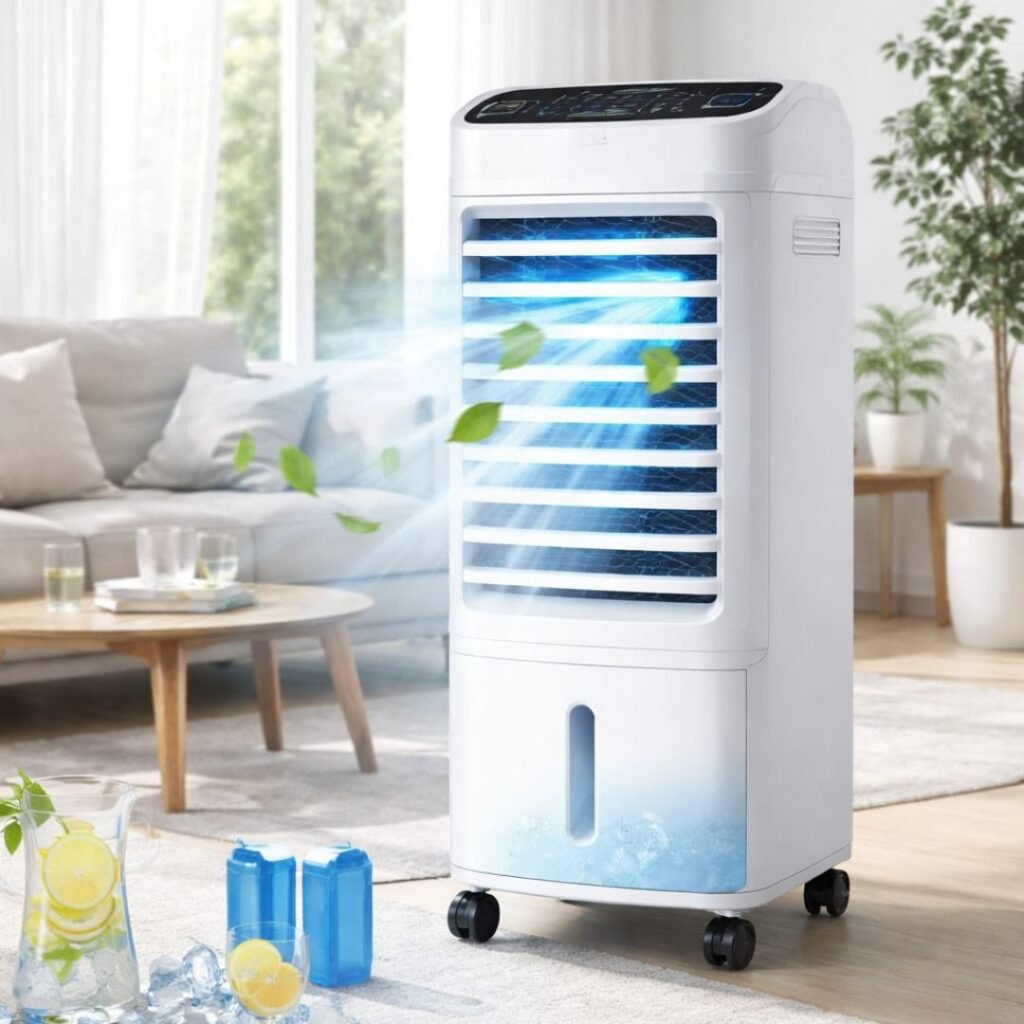
An air cooler, also known as an evaporative cooler, is a simple and energy-efficient cooling device. It works by pulling hot air through water-soaked cooling pads, which cool the air naturally before circulating it into the room.
Unlike ACs, air coolers do not use compressors or refrigerants. This makes them eco-friendly and extremely low in electricity consumption.
For people looking for even more budget-friendly summer solutions, devices like Top 7 Portable Neck Fans for Summer 2026 can also help with personal cooling.
What is an Air Conditioner (AC)?
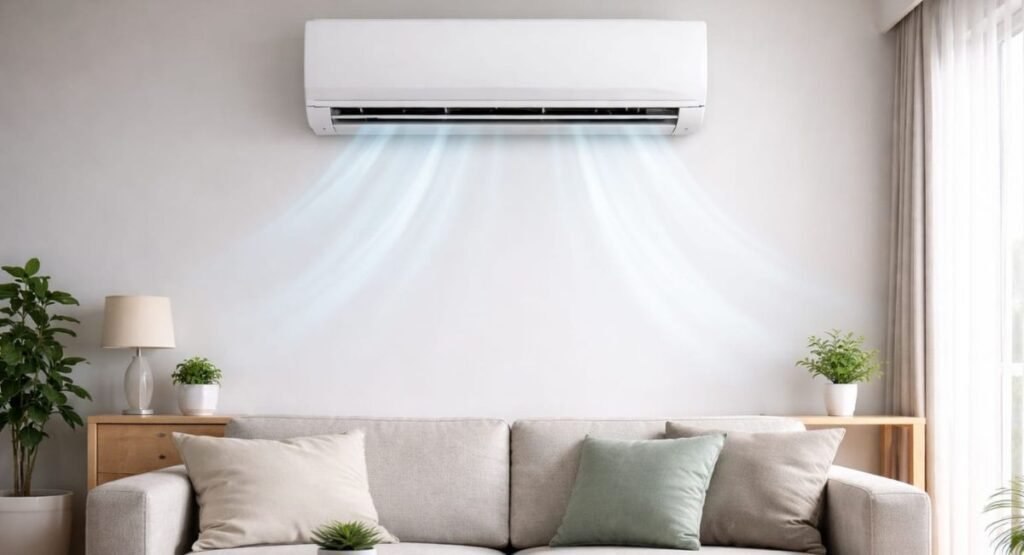
An air conditioner is a more advanced cooling system that uses refrigerants and a compressor to remove heat from indoor air and release it outside.
ACs are designed to provide powerful and consistent cooling, even in extreme heat and humidity. This is why they are commonly used in offices, malls, and modern homes.
However, when comparing Air Cooler vs AC 2026, the main concern with ACs is their high electricity consumption and cost.
Electricity Consumption: Which One Saves More?
Electricity usage is the biggest factor in deciding between Air Cooler vs AC 2026.
Power Consumption Comparison
Device | Average Wattage | Daily Usage (8 hrs) | Monthly Cost |
Air Cooler | 80–250 watts | Very Low | Low |
Air Conditioner | 1000–2000 watts | Very High | Expensive |
Key Takeaway
- Air coolers use up to 70–80% less electricity
- ACs consume much more power due to compressors
So, in terms of electricity savings, Air Cooler vs AC 2026 clearly favors air coolers.
Cooling Performance: Which One Cools Better?
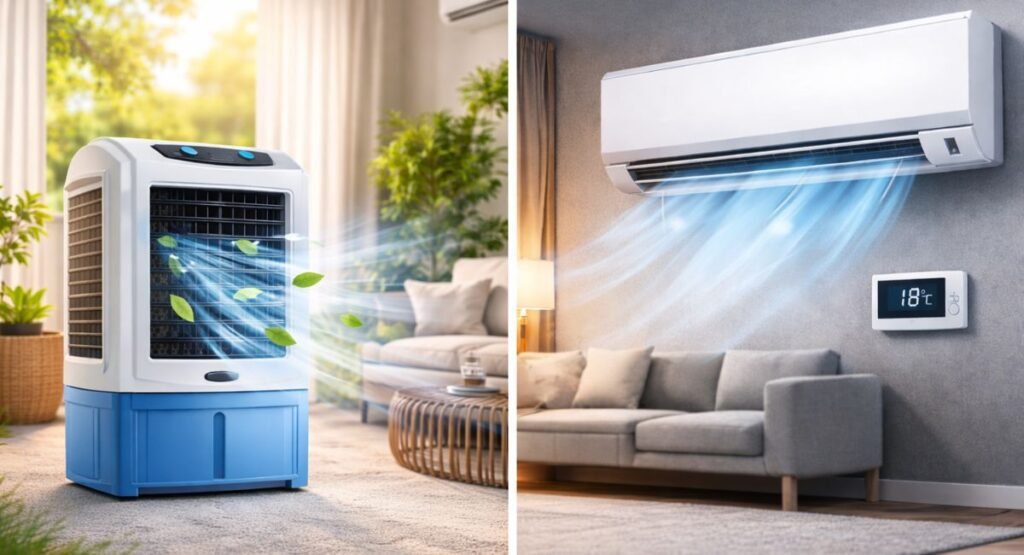
Air Cooler Cooling
- Best for dry climates
- Needs proper ventilation
- Cooling depends on humidity
AC Cooling
- Works in all climates
- Provides instant cooling
- Maintains exact temperature
When it comes to performance, AC is the winner. But remember, the discussion of Air Cooler vs AC 2026 is not just about cooling — it’s also about cost and efficiency.
Cost Comparison: Initial and Long-Term
1. Initial Cost
- Air Cooler: Affordable (budget-friendly)
- AC: Expensive (high upfront cost)
2. Maintenance Cost
- Air Cooler: Minimal (cleaning + water)
- AC: High (servicing + gas refill)
3. Electricity Cost
- Air Cooler: Very low monthly bills
- AC: High monthly electricity bills
Final Cost Verdict
In the long run, Air Cooler vs AC 2026 strongly favors air coolers for saving money.
Pros and Cons
Air Cooler Advantages
- Low electricity consumption
- Budget-friendly
- Environmentally safe
- Easy to maintain
Air Cooler Disadvantages
- Not effective in humid areas
- Requires airflow/ventilation
- Limited cooling in extreme heat
AC Advantages
- Powerful cooling
- Works in all weather conditions
- Better temperature control
AC Disadvantages
- High electricity bills
- Expensive installation
- Requires regular maintenance
Environmental Impact
In 2026, many users are also considering eco-friendliness when comparing Air Cooler vs AC 2026.
- Air coolers use natural evaporation → eco-friendly
- ACs use refrigerants → harmful to environment
If sustainability matters to you, air coolers are a better option.
Real-Life Electricity Cost Example
Let’s consider a real-life scenario:
Monthly Usage (8 hours daily)
- Air Cooler Bill: $5–$15
- AC Bill: $50–$150
This massive difference shows why people searching for Air Cooler vs AC 2026 often choose air coolers for budget-friendly living.
Best Use Cases
Choose Air Cooler If:
- You want low electricity bills
- You live in a dry climate
- You are on a budget
Choose AC If:
- You need strong cooling
- You live in a humid area
- Budget is not an issue
Smart Cooling Trends in 2026
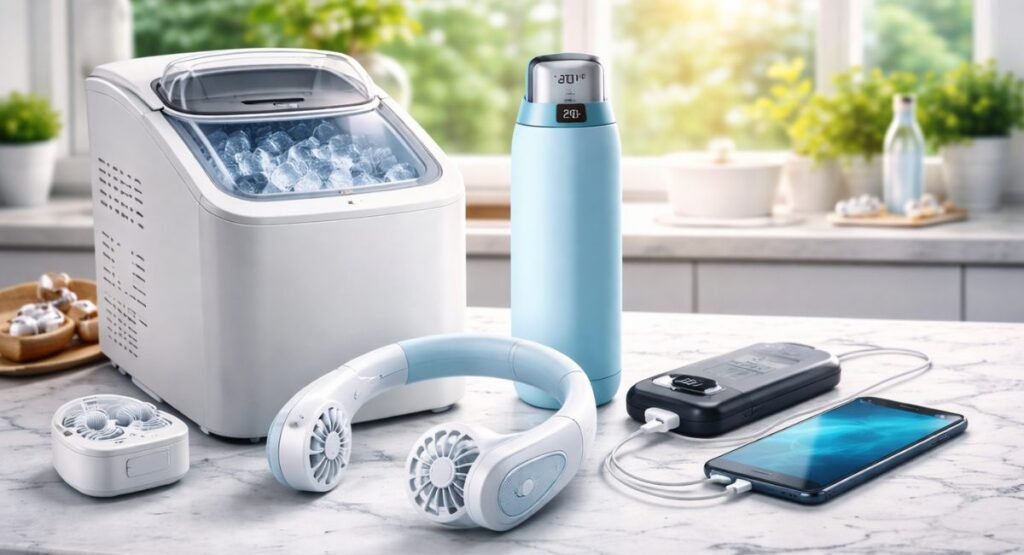
In 2026, people are combining multiple cooling solutions instead of relying on just one.
For example:
- Personal cooling devices like Top 7 Portable Neck Fans for Summer 2026
- Hydration support with Best Smart Water Bottle with Reminder 2026
- Kitchen cooling solutions like Best Countertop Ice Makers in 2026
These options help reduce dependence on AC and improve overall comfort.
Lifestyle-Based Recommendation
Your lifestyle plays an important role in choosing between Air Cooler vs AC 2026.
- Students & renters → Air Cooler
- Families in hot cities → AC
- Budget users → Air Cooler
- Premium comfort seekers → AC
Final Verdict: Air Cooler vs AC 2026
So, what’s the final answer to Air Cooler vs AC 2026?
If your goal is saving electricity and money:
Air Cooler is the best choice
If your goal is powerful cooling and comfort:
AC is the better option
Overall, for most users, especially in developing regions, Air Cooler vs AC 2026 leans strongly towards air coolers due to their affordability and energy efficiency.
FAQs
1. Which is better in 2026: air cooler or AC?
It depends on your needs. In Air Cooler vs AC 2026, air coolers are better for saving money, while ACs are better for cooling performance.
2. Does an air cooler consume less electricity than an AC?
Yes, air coolers use significantly less electricity, making them ideal for budget users.
3. Can air coolers replace AC?
In moderate climates, yes. But in extreme heat, AC is more effective.
4. Which is cheaper long-term?
Air coolers are much cheaper due to low electricity and maintenance costs.
5. Is AC worth buying in 2026?
Yes, if you prioritize comfort over cost and can afford higher electricity bills.

Welcome to Products Analysis! I’m Muhammad Hasban, the founder and author behind this platform. Here, I share detailed insights, reviews, and analysis of products to help you make smart buying decisions. My goal is to provide honest, reliable, and easy-to-understand information for shoppers everywhere.